Microsoft has published a video online that shows us how technology may change by 2019. Microsoft developed this video with the help of customers, partners, and thought leaders by showcasing different scenarios, such as, long-term trends, customer challenges, and emerging technologies. This video shows how the future might improve our lives both at home and work. They focused on three technology solutions: natural and intuitive expressions, seamless and secure connections, and contextual and anticipative insights. If you are interested in learning in more detail how these might work, visit the website stated below.
Believe it or not, nanotechnology is already being used in suntan lotion and other consumer products, and to provide stain resistance to clothing, and it will soon revolutionize computing. "Nanotechnology is the process of manipulating matter at the atomic level..." Research on nanotechnology shows potential for using light to process large amounts of data faster than ever.
Nanoplasmonic devices that guide and direct light are more than 100 times smaller than the width of a human hair and have been made to interact with light in a highly controlled way that could be used to build super high-speed 'optical computers', processing information using light instead of electric currents used today.
Research on nanoplasmonic devices is being conducted at Queen's University Belfast and Imperial College London.
Queen's University, Belfast. "Super-Fast Computers Of The Future." ScienceDaily3 September 2009. 2 May 2010 /releases/2009/09/090901082855.htm>
Can you imagine owning one of this in the nearest future, isn't it amazing to look at? This is a production of Sony and it might hit the market as late as 2015, we will see than.
This is call the XEL-1, it uses less energy because it does not have backlight compare to LCD and HDTV. This size is about 3 millimeters thick and measures 11 inches diagonally. This is just the smallest one so far, but eventually the bigger ones will be produce. It will be easier to mount on the wall of your homes because it is so "slim." You can even move it around because of it flexibility. This smallest size will run for $2500. It will all come down to how much you like it and the price will not even matter to you. As for now, we will wait and see.
The more computers are develop, the more portable they become. It is all about simplicity and the convience that comes with it for each individual and that is what that drives manufactures to come up with notebook that we can carry along. "The Simple Life," is what we all want. Think about owning one of these, if you don't like to type or maybe your job require a lot of standing, then you will love this gadget. It is all about your personal style and what works for you. This notebook comes with a digital pen that allows you to navigate and input "handwritten data,". This is call the "PaceBlade" and it will be launch by Hewlett-Packard Co so, if you would rather a space saver in your home or just something you can take along without the bulkiness, than maybe you will go for this.
This is what television will look like very soon, just be patient and you will see television moving to a new level. What is going to be the cost of this new advancement is what concerns me. However, it is going to stay no matter the cost. This is the new 3D Samsung 9000 series, it converts 2D video to 3D; it ranges in sizes from 19" to about 65," which is also about "third of an inch thin," but the most important part of it all, is that it comes with a "touch-screen" remote that allows you to watch TV on the remote and play your 3D movies on the screen all at once, what an option. This we all know will come with a price, no matter what; it is to the advantage of those that can afford and those that can't afford will have to stay with the old LCD and HDTV, but we all can agree that this new technology is what people have been waiting for, the "thinnest" television ever.
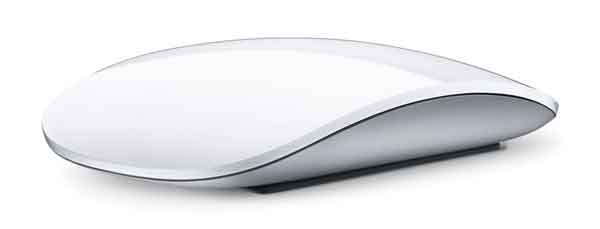
There are a few predictions of future replacements for the computer mouse;
One is a brain-computer interface, which will use the electrical impulses of neurons in the brain to tell the computer what to do.The main problem with this technology today is that it requires implants in the skull to function, which is the only option for some with medical conditions such as paralysis and Lou Gehrig’s disease but not an attractive idea for all computer users.
Another is eye-tracking which uses a high resolution camera and an infrared light but again, this is a high cost option and currently only practical for those with severe physical disabilities.
Voice recognition is now mainly used in business for specific applications like transcribing spoken words to written documents with only a small core group of physically disabled people using it to completely control all functions of their computer.In the future we may all be speaking to our computers instead of using a keyboard or mouse.
Radio has been a huge part of our lives over the last century and advancements in technology will forever change the way we listen to radio. The future of radio is in Digital Audio Broadcasting or DAB. DAB radios use a digital signal to provide excellent sound quality, and a wide range of stations and programs to listen to. There are many advantages to listening to DAB radio compared to analog radio. Tuning to a new station is easier as it is much like changing the channel on a TV and all stations show their names so you know what station you’re listening to. Have you ever heard a new song on the radio, but did not hear the DJ mention the artist or name of a song? Well, some stations actually broadcast the artist and name of the song being played on your radio. DAB radios can also be portable radios that look like MP3 players, but smaller in size and can be transported outside while working in the yard or garage. In the very near future, handheld DAB radios will be able to show image slideshows just like on TV. Listeners will be able to view the artist, album covers, advertising, and other information. Radio technology has given us better sound quality, convenience, and a more enjoyable listening experience. http://www.techradar.com/news/portable-devices/other-devices/dab-radio-with-images-on-the-way-159287
We have become very reliant on cell phones in the last twenty or so years, including using them as our main phones at home instead of landline phones. The future technology of cell phones is incredible. Here is a preview of just a few of tomorrow's cell phones:
"Nokia Flexible Concept Phone" This phone made of memory plastic can be molded to fit around your wrist, yet can be heated to return to its original shape.
"Visual Sound Phone" This phone is designed for deal people that uses a voice-to-text concept which is a huge step considering the current teletypewriters.
"Mobile Script Phone" The phone pictured here has a unique style with a small screen, but has a larger touch screen hidden within the phone’s body.
"Natural Year Phone" The fact that most people change phones every two years is the concept of this phone. It will biodegrade naturally once the two years is up.
The “Morph” phone uses nanotechnology for flexibility and transparency screen to mold the phone into any shape that is convenient for the user. Plus, the phone can even clean itself.
"Sticker Phone" This phone is rechargeable through a solar panel that can stick to a window via a suction located on the back of the phone.
"Leaf Phone" This organic phone joins the creative visual aspect with functionality, plus you can wrap it around any part of the body, for example, your wrist, arm, or neck.
"Cobalto Phone" This concept is definitely taking us into the future with its almost all glass design. This phone’s main feature would include 3D images which could help Google maps become even more useful.
"Window Phone" This phone has the ability to tell the weather conditions at any time. In order to text, you blow on the screen to switch modes and write with your finger as a stylus.
If you would like to see additional cell phones of the future, check out the website below.
When cell phones first appeared on the market, it was great just to be able to make call outside of your home without using a pay phone. Today, cell phones enable you to take photos, email and internet access. Tomorrow’s cell phones will include even more features than ever before, such as, an always connected portable game consoles, full-featured TVs, and credit cards. The speed of cell phone networks will move data at several megabits per second. The design of handsets will become sleeker, have longer battery life, and e-payment support. The camera can expect higher resolutions and the same processing capabilities now seen in digital and video cameras. These new features could be here within the next few years. http://www.pcworld.com/article/126854/the_future_of_cell_phones.html
Wednesday, March 31, 2010
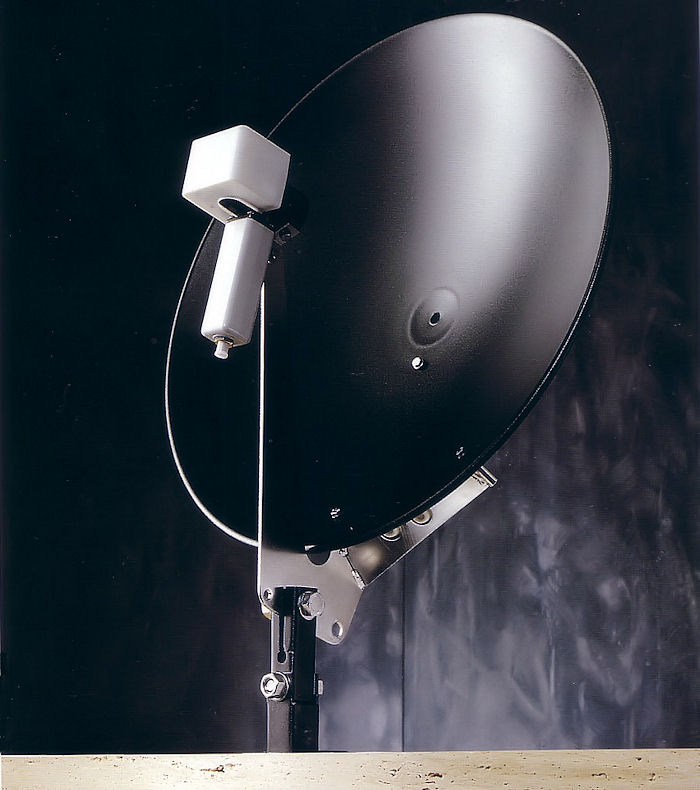
You have probably seen a satellite dish hanging on a roof top of a house, apartment or even a truck. So, television use satellite,but it is not the only electronic that use satellite. There are the phones, the internet and radio and so many more. The system that makes this possble is called the "Direct Broading Systems." This system is responsible for the transmission of communication to many homes and businesses. The DBS was first used in the U.S.A in 1993, it uses the "geostationary Orbit" to receive television signals sent up from the earth surface, which are then "amplify."When they are "amplify," they are transmitted back down to the earth. The "uplink" band transmit signals down, while the "downlink"picks up the signals by the means of "antenna."
There are a lot of flat televisions out there, but whatever one you buy, could means; how long it will last. The Plasma Television are built in with flouresent light bulb, which also have cells. Each of these cells are seaprated,with "neon-gas" injected. This gas is electrically charge whenever the television is on. These charge gas, then strikes red, green and blue phosphors; emitting the images. However, these televisions are prone to greater heat, "static images"and performance quality from higher "altitude are poor. What about the LCD? Compare to the Plasma, the LCD panel contain two "layers," which is transparent and polarized. One of the layer contain a "polymer" which holds the "liquid crystals. The LCD needs less power and also; the heat generated are not as much, to produce images, The LCD needs external light source for images to be visible. Overall, the LCD advantages rides over that of the Plasma, but it is all about how much you are willing to spend on a flat screen television. Compare to the LCD, the plasma is cheaper, but why pay a higer price for flat screen television, when you can get one cheaper and be a part of the growing satistic.
If you have one, than you know how far we have come, even if you don't have one, you still know that technology of televisions has come a long way.The pictures and sound quality are so amazing; even the color. The flat screen televisions are less compact in size. These characteristics has made it one of the most hottest technology of many homes in our society. The flat screen television was first introduced in the late 1990s, but it was first displayed in 1964 at the University of Illinois. Today you can see a varities of all brands and size of televisions, but it was Sony and Sharp that introduced the very first large flat screen television; in 1997. This was done in a collaboration of both Companies, eventhough flat screen TV was avalible, it was limited to certain sizes. Sony actually owned the a trademark called "Plasma-Addressed LCD" (PALC), which was combined with LCD and plasma; which together created a better picture. At the time it was about 42 inches and sold at around $ 15,000, but majority of manufactures found that the PALC technology was too costly and also unreliable for wide-scale use,therefore they went for plasma instead. In 2006, LCD(liquid crystal displays) were ranging in sizes from 42 inches, while thee plasma TV was going at 103 inches, however LCD screens were the top of the market and plasma was accounting for only 12% or the televisions sales. Most buyers look for LCD than Plasma because they are "thinner," "brighter" and is "efficient," but will go for plasma because they are larger in size.
Internet radio began around 1990. Thanks in part to the World Wide Web, we can broadcast audio signals and access internet radio from anywhere in the world. There are three different components that are streamed; audio stream source, audio stream repeater, and audio stream playback. The repeater converts the audio bits into a streaming format, while the source makes it available, and the playback system retrieves the content. It has become a large communication base for talk shows, political debates, women’s issues, and more. Basically, any computer with internet access can be converted into an internet radio receiver with the download of software like Windows Media Player or RealOne. Today internet broadcasters can take requests from listeners, provide album cover art, and links to buy CDs. The playlists can handle over 50,000 files. There is a “Gap killer” available that removes the gap between two tracks. Previously, broadcasts had to be stopped whenever something was changed or inserted like advertisements. Although today you need to have a PC with internet access to get internet radio, as technology evolves, it could become available on mobile phones and car audio systems in the near future. http://www.buzzle.com/articles/internet-radio-broadcasting.html
Satellite radio was introduced in 1992 by XM Radio and Sirius who became the first companies to earn FCC licenses. This gave the companies the ability to commercially manufacture and make possible the use of satellite radios. It would take almost a decade to launch the digital satellite radio across the United States. In 2001, XM began to deliver nationally with over 100 channels. Satellite radio functions with fixed-location receivers, dish antennas, and signal repeaters that are provided by the radio services. Listeners can capture audio programming at any remote location without interruption or interference due to the weather, tall buildings, and bridges. The use of orbiting satellites has greatly improved sound quality and frequencies over analog radio signals. Today, over 170 channels exist that include music, current affairs, celebrity controversy, sports, science, and children’s programs. Also, a state-of-the-art highly digitized CD quality is being used along with companies now equipped with transportable and vehicle mount antennas to take receiver-configurations into tomorrow. http://www.buzzle.com/articles/history-of-satellite-radio.html
Recently I have been thinking about buying a laptop computer and I began paying attention to articles, product reviews, and marketing information.I noticed three terms being used: laptop, notebook, and netbook, so I decided to find out what the differences are between the three products in order to decide which one I actually need.
<Acer Aspire Notebook
So far I have found that a laptop is closest in capabilities to a desktop computer so I need to decide if I need all those features or if I can work with less.
The laptop usually has a larger screen and better graphics than either the notebook or the netbook but since I’m not a game player this is not a deciding factor for my purposes.
The keyboard on a laptop is slightly smaller than on a desktop, while the keyboards on the notebook and netbook are much smaller – this is not only a comfort consideration but a functional one too; if the keyboard is too small it may interfere with my productivity.
A laptop and a notebook may have a DVD-RW drive but a netbook will not have one.The laptop is larger and heavier than either the notebook or the netbook so I’ll need to decide how much weight is practical to be carrying around with me.Battery life of a laptop is much shorter than on the lower-consuming notebook and netbook.
<Sony Vaio Netbook
I think I can eliminate the netbook since it is used for Internet browsing, email, and social networking but not for business software like Word, Excel, Quicken, and accounting applications, which I use every day.
If anyone from class can give me helpful information, or insights from their own experience, to aid in my decision-making it would be much appreciated!
In 1990 the World Wide Web came into existence when HyperText Markup Language, or HTML, was developed by Tim Berners-Lee.Specifications such as URL’s (Uniform Resource Locator) and HTTP (HyperText Transfer Protocol) were developed which allowed browsers like Netscape or Microsoft Internet Explorer to follow links to view websites.
Microsoft Windows 3.0 was first marketed in May 1990 allowing PC’s to run graphical applications and to run multiple applications at one time – things we totally take for granted today.
In 1993 the first Pentium Processor was released, it was the 5th generation of microprocessor from Intel.Also in 1993, the Mosaic web browser was released, which was the first commercial software that allowed Internet users to view graphics on the web.Mosaic was designed by Eric Bina and Marc Andreesen.
In 1994 Netscape Communications Corporation was founded and began the Internet boom of the 1990’s.Netscape was originally called Mosaic Communications Corporation.
Yahoo was also founded in 1994, and the first Iomega Zip Disk was released.
The second generation (or 2G network) cell phones began appearing in 1991 and included many features with higher frequencies. Companies shifted their focus from the large car phones to handheld phones and became the standard. With new technology advances, such as, smaller batteries and more energy efficient devices; demand for cell phones rose. As demand rose, new transmission towers were installed in order to expand areas of coverage. Text messaging was introduced in 1993 when Finland sent the first person to person text message. Other innovations in the 1990’s was downloading content, option to change ring tones, and being able to download new ring tones. By 2000, the 3G network was developed, digital replaced analog, and changed to the IMT-2000 standardization that set data transfer rates. The late 2007/early 2008 saw over 300 million cell phones in use around the world with the ability to download games, surf the internet, take and send pictures and video. Smart phones allow users to even edit documents and send emails when out of the office. It is truly remarkable that we have gone from briefcase sized phones to light weight phones that fit in a pocket. http://www.symatech.net/heistory-cell-phones
The journey continued with the introduction of the first generation cell phone. The early mobile phone began as two-way radios and first phones to allow direct dialing. These phones were released by Ericsson in Sweden in1956 and called MTA for Mobile Telephone System A. The phones were heavy and bulky and installed in cars with only about 150 users. Leonid Kupriyanovich created the radiophone or wearable mobile phone in 1957 in the USSR. Although, the phone required a base station to operate, it could be used by several people and weighed a lot less than the MTA. In December of 1971, AT&T submitted their cell network proposal to the Federal Communication Commission. The proposal was kept wrapped up in committee hearings for eleven years before the FCC finally approved the cell phone in the United States. Dr. Martin Cooper of Motorola launched the first handheld cell phone in 1973. AT&T created the first cell network in 1978 in Chicago before the FCC approved the network in 1983. The early phones all used analog system, but were designed to be installed in vehicles not to be carried around. The reason was because they were still quite large and heavy and often the size of a briefcase. It would be the mid to late 1980’s when Motorola designed the first handheld cell phones. The first cell phone is pictured at left.
Telephone technology has certainly changed a great deal in the last twenty years. The improvement and technology of the telephone continued with invention of the cordless phone. Cordless phones were first introduced in 1980, but they operated on such a low frequency of 27 MHz (mega-herz) that it caused a limited range, noise, and static. Plus security was another issue where people could easily intercept signals from another cordless phone due to an inadequate number of channels. In 1986, the frequency range was increased to 47-49 MHz included less interference and power to run, yet range and sound quality remained poor. Digital cordless phones became available in 1994 with a frequency range of 900 MHz, which improved clarity and radio scanners could no longer pick up other conversations. By 1995, the development of digital spread spectrum (DSS) technology showed a new way of sending signals from the base to the handset. This enabled digital information to be spread into pieces over several frequencies and completely solved the interference problem. The only problem was they were very expensive, anywhere from $400 to $500 a piece, and had a limited number of choices. Between 1998 and 2003 the frequency range increased from 2.4 GHz to 5.8 GHz and expanded the operating distance. By 2000, the cost of cordless phones decreased to under $100. http://www.articlesbase.com/business-articles/history-of-the-cordless-phones-797191.html