Sunday, April 18, 2010

The Future of Radio Broadcasting


Radio has been a huge part of our lives over the last century and advancements in technology will forever change the way we listen to radio. The future of radio is in Digital Audio Broadcasting or DAB. DAB radios use a digital signal to provide excellent sound quality, and a wide range of stations and programs to listen to. There are many advantages to listening to DAB radio compared to analog radio. Tuning to a new station is easier as it is much like changing the channel on a TV and all stations show their names so you know what station you’re listening to. Have you ever heard a new song on the radio, but did not hear the DJ mention the artist or name of a song? Well, some stations actually broadcast the artist and name of the song being played on your radio. DAB radios can also be portable radios that look like MP3 players, but smaller in size and can be transported outside while working in the yard or garage. In the very near future, handheld DAB radios will be able to show image slideshows just like on TV. Listeners will be able to view the artist, album covers, advertising, and other information. Radio technology has given us better sound quality, convenience, and a more enjoyable listening experience.
http://www.techradar.com/news/portable-devices/other-devices/dab-radio-with-images-on-the-way-159287

Tomorrow's Cell Phones

We have become very reliant on cell phones in the last twenty or so years, including using them as our main phones at home instead of landline phones. The future technology of cell phones is incredible. Here is a preview of just a few of tomorrow's cell phones:


"Nokia Flexible Concept Phone" This phone made of memory plastic can be molded to fit around your wrist, yet can be heated to return to its original shape.


"Visual Sound Phone" This phone is designed for deal people that uses a voice-to-text concept which is a huge step considering the current teletypewriters.


"Mobile Script Phone" The phone pictured here has a unique style with a small screen, but has a larger touch screen hidden within the phone’s body.


"Natural Year Phone" The fact that most people change phones every two years is the concept of this phone. It will biodegrade naturally once the two years is up.


The “Morph” phone uses nanotechnology for flexibility and transparency screen to mold the phone into any shape that is convenient for the user. Plus, the phone can even clean itself.


"Sticker Phone" This phone is rechargeable through a solar panel that can stick to a window via a suction located on the back of the phone.


"Leaf Phone" This organic phone joins the creative visual aspect with functionality, plus you can wrap it around any part of the body, for example, your wrist, arm, or neck.


"Cobalto Phone" This concept is definitely taking us into the future with its almost all glass design. This phone’s main feature would include 3D images which could help Google maps become even more useful.


"Window Phone" This phone has the ability to tell the weather conditions at any time. In order to text, you blow on the screen to switch modes and write with your finger as a stylus.
If you would like to see additional cell phones of the future, check out the website below.

Future of Cell Phones


When cell phones first appeared on the market, it was great just to be able to make call outside of your home without using a pay phone. Today, cell phones enable you to take photos, email and internet access. Tomorrow’s cell phones will include even more features than ever before, such as, an always connected portable game consoles, full-featured TVs, and credit cards. The speed of cell phone networks will move data at several megabits per second. The design of handsets will become sleeker, have longer battery life, and e-payment support. The camera can expect higher resolutions and the same processing capabilities now seen in digital and video cameras. These new features could be here within the next few years.
http://www.pcworld.com/article/126854/the_future_of_cell_phones.html

Wednesday, March 31, 2010


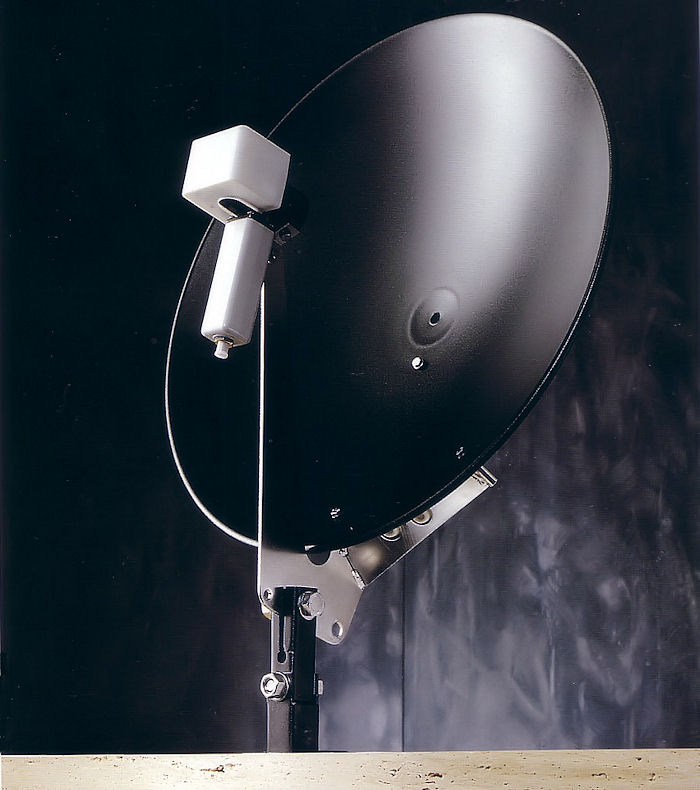
You have probably seen a satellite dish hanging on a roof top of a house, apartment or even a truck. So, television use satellite,but it is not the only electronic that use satellite. There are the phones, the internet and radio and so many more. The system that makes this possble is called the "Direct Broading Systems." This system is responsible for the transmission of communication to many homes and businesses. The DBS was first used in the U.S.A in 1993, it uses the "geostationary Orbit" to receive television signals sent up from the earth surface, which are then "amplify."When they are "amplify," they are transmitted back down to the earth. The "uplink" band transmit signals down, while the "downlink"picks up the signals by the means of "antenna."

Tuesday, March 30, 2010

The Best Of The Best.


There are a lot of flat televisions out there, but whatever one you buy, could means; how long it will last. The Plasma Television are built in with flouresent light bulb, which also have cells. Each of these cells are seaprated,with "neon-gas" injected. This gas is electrically charge whenever the television is on. These charge gas, then strikes red, green and blue phosphors; emitting the images. However, these televisions are prone to greater heat, "static images"and performance quality from higher "altitude are poor. What about the LCD? Compare to the Plasma, the LCD panel contain two "layers," which is transparent and polarized. One of the layer contain a "polymer" which holds the "liquid crystals. The LCD needs less power and also; the heat generated are not as much, to produce images, The LCD needs external light source for images to be visible. Overall, the LCD advantages rides over that of the Plasma, but it is all about how much you are willing to spend on a flat screen television. Compare to the LCD, the plasma is cheaper, but why pay a higer price for flat screen television, when you can get one cheaper and be a part of the growing satistic.

How Flat Will They Go?


If you have one, than you know how far we have come, even if you don't have one, you still know that technology of televisions has come a long way.The pictures and sound quality are so amazing; even the color. The flat screen televisions are less compact in size. These characteristics has made it one of the most hottest technology of many homes in our society. The flat screen television was first introduced in the late 1990s, but it was first displayed in 1964 at the University of Illinois. Today you can see a varities of all brands and size of televisions, but it was Sony and Sharp that introduced the very first large flat screen television; in 1997. This was done in a collaboration of both Companies, eventhough flat screen TV was avalible, it was limited to certain sizes. Sony actually owned the a trademark called "Plasma-Addressed LCD" (PALC), which was combined with LCD and plasma; which together created a better picture. At the time it was about 42 inches and sold at around $ 15,000, but majority of manufactures found that the PALC technology was too costly and also unreliable for wide-scale use,therefore they went for plasma instead. In 2006, LCD(liquid crystal displays) were ranging in sizes from 42 inches, while thee plasma TV was going at 103 inches, however LCD screens were the top of the market and plasma was accounting for only 12% or the televisions sales. Most buyers look for LCD than Plasma because they are "thinner," "brighter" and is "efficient," but will go for plasma because they are larger in size.

Monday, March 29, 2010

HIstory of Internet Radio

Internet radio began around 1990. Thanks in part to the World Wide Web, we can broadcast audio signals and access internet radio from anywhere in the world. There are three different components that are streamed; audio stream source, audio stream repeater, and audio stream playback. The repeater converts the audio bits into a streaming format, while the source makes it available, and the playback system retrieves the content. It has become a large communication base for talk shows, political debates, women’s issues, and more. Basically, any computer with internet access can be converted into an internet radio receiver with the download of software like Windows Media Player or RealOne. Today internet broadcasters can take requests from listeners, provide album cover art, and links to buy CDs. The playlists can handle over 50,000 files. There is a “Gap killer” available that removes the gap between two tracks. Previously, broadcasts had to be stopped whenever something was changed or inserted like advertisements. Although today you need to have a PC with internet access to get internet radio, as technology evolves, it could become available on mobile phones and car audio systems in the near future.
http://www.buzzle.com/articles/internet-radio-broadcasting.html